
Pinball Go 88 revolves around a steel ball moving across an inclined playfield while interacting with different elements placed throughout the table. Flippers help keep the ball in play, while bumpers, targets, lanes and other components can affect its direction or contribute to the score. The result of a session therefore depends on how the ball moves through the playfield and which scoring elements it reaches.
The launch begins each ball’s journey

A new ball normally enters the playfield through a launch lane controlled by a plunger or another launching mechanism. The initial launch sends the ball upward from the starting area and establishes its first movement across the table.
Once the ball enters the main playfield, its path becomes dependent on the slope, walls and interactive components it encounters. Unlike a fixed sequence, the ball can change direction several times as it moves between different areas.
The launch stage therefore connects the starting position with the active playfield and marks the beginning of the ball’s scoring sequence.
The playfield creates multiple paths
The playfield is the main area where the ball travels and interacts with different components. Depending on the table design, it can contain lanes, ramps, bumpers, targets, rollovers and other elements that redirect the ball or register scoring events.
These elements divide the table into several movement zones. A ball entering one lane may return through another section, while a ramp can transport it toward a higher or different part of the playfield.
As a result, the same launch can produce very different movement sequences depending on which components the ball reaches.
See more: Download Go88 quickly and enjoy online games
Flippers control the lower section
Flippers are the primary controls used to prevent the ball from leaving the playable area through the bottom of the table. Their position allows the player to redirect the ball back toward the upper sections of the playfield.
The flippers are therefore more than simple scoring components. Their main function is to influence the ball’s direction and extend the current ball’s time in play.
Their position near the lower section also makes them an important part of the transition between active play and a potential drain.
Bumpers change the ball’s direction
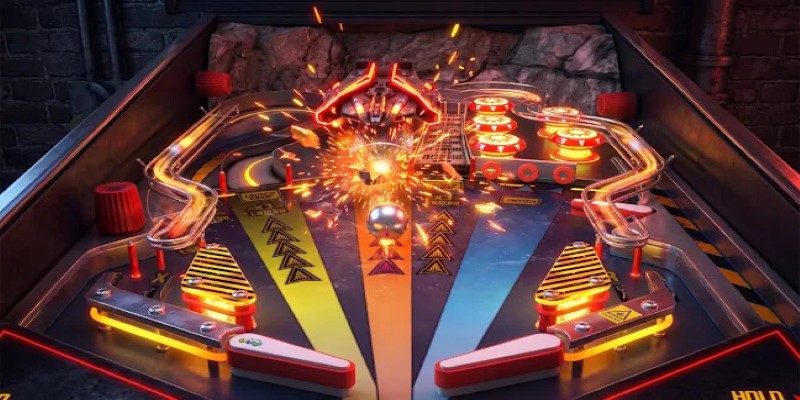
Bumpers are interactive elements that react when the ball makes contact with them. In many pinball tables, a bumper pushes the ball away from its surface, creating another movement path and potentially sending the ball toward additional scoring elements.
A ball can therefore make several rapid contacts within a bumper area. Each contact may contribute to the score according to the rules of the particular table.
The role of bumpers is consequently both mechanical and scoring-related, since they influence movement while potentially registering points at the same time.
Targets reward direct contact
Targets are designated areas on the playfield that register a hit when the ball reaches them. Their scoring value and behavior can vary between tables, with some targets remaining in place and others changing state after being hit.
Some tables use groups of targets that must be hit in a particular sequence or completed as a set. Completing such a group can activate another feature, increase a bonus or alter the scoring state.
This makes targets different from ordinary surfaces because their purpose is usually tied directly to a defined scoring or progression condition.
Ramps redirect the ball to another area
A ramp provides a controlled path that carries the ball from one section of the playfield toward another. Depending on the design, the ball may travel upward, across the table or toward a return lane after entering the ramp.
Ramps can therefore create longer movement sequences than a simple bumper collision. A single successful entry may lead the ball through several connected areas before it returns to the main playfield.
The presence and function of ramps vary considerably between pinball tables, so the displayed table layout determines which routes are available.
Lanes organize repeated movement
Lanes are narrow paths that guide the ball toward a particular section of the playfield. Some lanes can register a score when the ball passes through them, while others return the ball toward the flippers or another active area.
In the lower portion of a table, lanes can also determine whether the ball returns toward the flippers or moves toward an area where it can leave play.
Their position therefore affects both scoring and ball control, making lane recognition useful when following the movement of an active ball.
Slingshots create quick rebounds
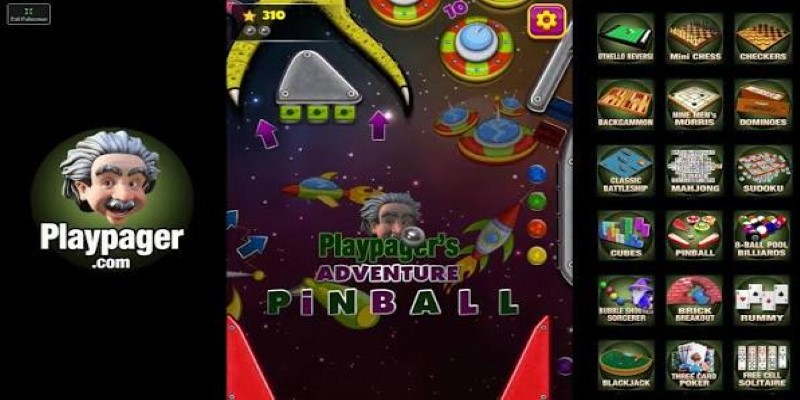
Slingshots are positioned around the lower portion of many classic pinball layouts and use elastic or mechanical elements to send the ball away after contact. They can produce a quick change of direction while also registering a scoring event on some tables.
Because the ball can rebound rapidly from these areas, slingshots often contribute to the unpredictable movement of a live ball.
Their location close to the flippers also means that a single interaction can redirect the ball toward the center, a side lane or another playfield component.
Scoring comes from different types of contact
Pinball scoring is generally distributed across several playfield components rather than being generated by one universal action. Bumpers, targets, rollovers, spinners and other elements can each have their own scoring behavior depending on the table.
This creates multiple ways for a single ball to accumulate points. A ball may hit a bumper, pass through a lane and then reach a target, with each interaction potentially contributing to the running score.
The exact values and bonus conditions are table-specific, so the information displayed on the particular Pinball Go88 game should be used when identifying individual scoring elements.
Bonus features connect several successful actions
Some pinball tables use groups of targets, lanes or other components to activate bonus states. Completing a defined sequence can unlock additional points or change the value of subsequent interactions.
This means the significance of one hit can extend beyond its immediate score. A target may contribute points when struck while also progressing a larger objective shown on the table.
The interface can display these changes through lights, counters, multipliers or other indicators depending on the game design.
The ball remains active until it leaves the playfield
A ball remains part of the current sequence while it is moving within the playable area. The player uses the flippers and the table’s interactive components to keep it from reaching the drain or another exit point.
Once the ball leaves the active playfield, the current ball sequence ends and the game can calculate any applicable bonus or update the overall score. Traditional pinball rules commonly treat the drain as the end of that ball’s active period.
The next ball, when available, then begins a new movement sequence rather than continuing the previous ball’s exact position.
Conclusion
Pinball Go88 is centered on the continuous movement of a ball across an interactive playfield. The launch establishes the initial path, while flippers, bumpers, targets, ramps, lanes and slingshots repeatedly alter its direction and create scoring events. Reading these components as connected parts of the same ball sequence makes it easier to understand how a Pinball Go88 round develops from launch to the moment the ball leaves the playfield.